
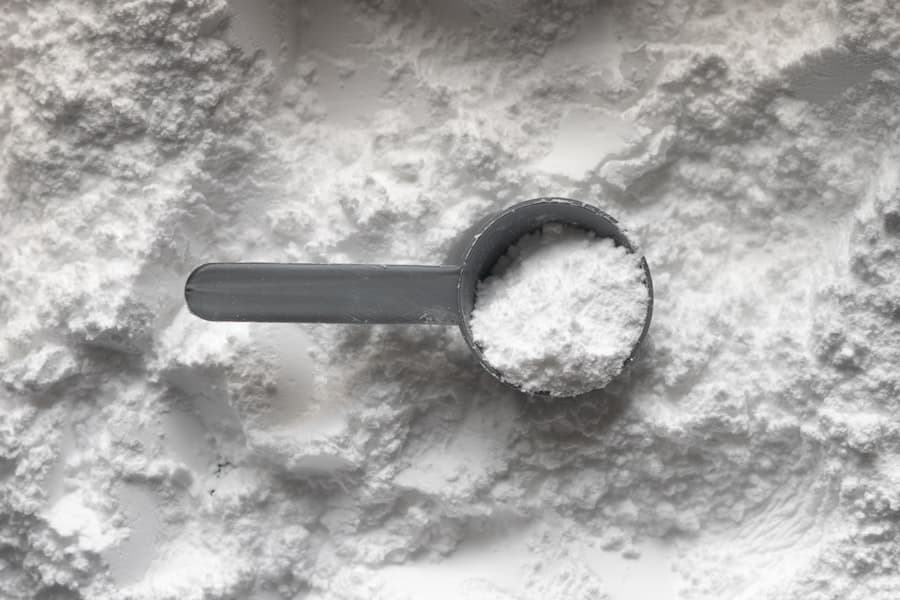
Does a Higher Price Tag Mean Better Protein? Common Wisdom vs. the Research
Published: 2026-06-25
Written by: Shingo YoshizakiReviewed by: Tomonobu Someda
"Cheap protein is inferior and expensive protein builds more muscle" is a claim that circulates freely in gyms and supplement reviews. But does price actually correlate with hypertrophy outcomes? We examine three angles — including whey type differences — through the lens of the research.
Let the data settle it.
Does a higher protein price tag translate to greater muscle hypertrophy?
What's said
プロテインレビューサイト・SNSの口コミ
Premium proteins have better amino acid scores, superior absorption, and fewer fillers. That's why the expensive stuff works better. Cheap protein is padded with junk and doesn't deliver.
What research says
- Muscle protein synthesis (MPS) is governed by total protein dose, leucine content, amino acid profile, and digestion rate — not price.
- The meta-analysis by Morton et al.
- (2018) covering 49 studies and over 1,800 participants shows that the key drivers are quantity and amino acid quality, not brand tier.
- When two products use the same protein source (e.g., both whey concentrate) and their nutritional panels match, the higher-priced option offers no additional hypertrophy benefit.
- The premium is typically explained by branding, flavoring R&D, third-party testing costs, and marketing, not a superior anabolic response.
When nutritional panels are equivalent, price does not predict hypertrophy outcomes. Choose by protein per serving, leucine content, and total calories — not by cost.
Do whey concentrate, isolate, and hydrolysate produce meaningfully different hypertrophy results?
What's said
プロテインメーカーのマーケティング・サプリ系YouTuber
Isolate is ultra-pure with no fat or lactose, and hydrolysate is absorbed so fast it spikes muscle protein synthesis dramatically. Concentrate is just the cheap stuff — inferior for muscle building.
What research says
- West et al.
- (2011) demonstrated that a rapidly absorbed whey hydrolysate elicits a stronger acute mTOR signaling response immediately post-exercise compared to slower-absorbing sources.
- However, Tang et al.
- (2009) found that the MPS differences among hydrolysate, casein, and soy were largely confined to the acute post-exercise window (a few hours), with chronic hypertrophy adaptations over weeks showing a diminishing gap.
- In real-world conditions — meals spread through the day, combined with food — the chronic muscle-building difference between isolate and concentrate is minimal.
- Isolate does offer practical benefits for lactose intolerance or fat-restricted diets.
Hydrolysate has an edge in acute post-exercise MPS signaling, but the difference in chronic hypertrophy is small. Concentrate is sufficient for most trainees without lactose intolerance. The extra cost of isolate is justified primarily by digestive tolerance, not a meaningful muscle-building advantage.
Are whole-food protein sources equivalent to protein supplements for muscle building?
What's said
サプリ販売サイト・フィットネス雑誌の広告
Protein from whole food isn't absorbed as efficiently as supplements. Protein powders are purer and faster, so they reach the muscles more effectively. You can't make serious gains on food alone.
What research says
- Van Vliet et al.
- (2015) reviewed evidence showing that animal-based whole foods (chicken, eggs, dairy) contain essential amino acid and leucine profiles comparable to whey protein, making them fully capable of stimulating muscle protein synthesis.
- Morton et al.
- (2018) confirmed that total protein intake is the dominant predictor of hypertrophy, with protein source (food vs. supplement) a secondary factor.
- The real-world advantages of protein powder are convenience, portability, and the ability to hit protein targets without excess calories — not a superior anabolic mechanism over food.
When total protein and amino acid profiles are matched, whole-food sources and supplements produce comparable hypertrophy outcomes. Supplements earn their place through convenience, not a superior anabolic mechanism.
Related supplements
PR
Helps you reach total daily protein
The links below include affiliate links (PR).
Related research
Sources
- Morton RW et al. (2018) Br J Sports Med — タンパク質補給が筋肉量・筋力に与える影響のメタ分析
- Tang JE et al. (2009) Appl Physiol Nutr Metab — ホエイハイドロリセート・カゼイン・大豆プロテインの安静時およびレジスタンス運動後の筋タンパク合成への影響
- West DWD et al. (2011) J Appl Physiol — 急速なアミノ酸血中濃度上昇が筋タンパク合成と細胞内シグナルを増強する
- van Vliet S et al. (2015) J Nutr — 植物性 vs 動物性タンパク質の骨格筋同化応答の比較レビュー
Published: 2026-06-25
Written by
Shingo YoshizakiSoftware Engineer / Research Writer at BODYDATA
An engineer's job is verification. I read the source before I trust gym lore — same as code.
View profile →
Reviewed by: Tomonobu Someda
Content reviewed from the perspective of coaching practice and supplement-industry experience